Analytics built for developers
Open source, self-hostable, and API-first. Add analytics to any project with a single script tag and start collecting data in minutes.
Fully open source under the MIT license. Inspect the code, contribute, or fork it for your own needs.
The tracking script is under 2KB — no impact on your page speed or Core Web Vitals scores.
Cookie-free tracking means no consent banners. One less thing to implement and maintain.
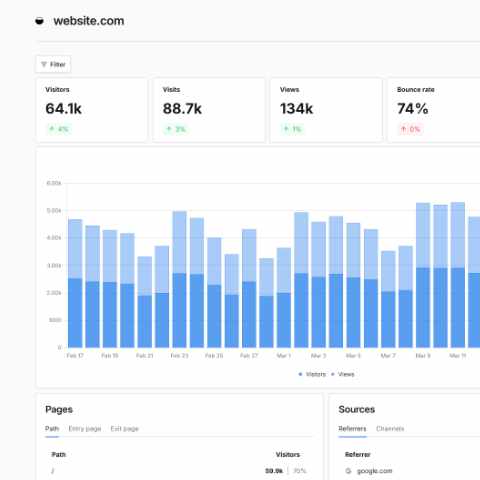
Events appear on the dashboard the moment they happen. No batch processing or data lag.
Built on PostgreSQL — the database you already know. No proprietary data stores or vendor lock-in.
Track all your projects, staging environments, and side projects from a single instance.
Full REST API for querying data, managing websites, and automating workflows programmatically.
GDPR and CCPA compliant out of the box. No personal data collected, no legal headaches.
Install in minutes
Deploy Umami with a single Docker command or connect to Umami Cloud. Add one script tag to your site and you are collecting data immediately. No complex data streams, tag managers, or SDK integration required.
Track custom events with a data attribute
Add data-umami-event to any HTML element to start tracking clicks, form submissions, signups, or downloads. Attach custom properties with data-umami-event-* attributes. No SDK calls, no event schemas to configure — just markup.

Build with the REST API
Every piece of data in Umami is accessible through a well-documented REST API. Pull stats into internal dashboards, feed data into CI pipelines, generate custom reports, or build integrations with your existing tools.
Monitor performance and Core Web Vitals
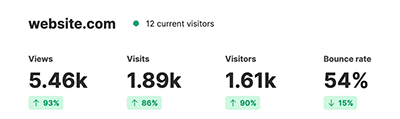
Track page load times and web performance metrics alongside your traffic data. See how speed affects bounce rate and engagement without needing a separate monitoring tool.

Debug user issues with session replay
Watch real user sessions to understand how visitors interact with your site. See exactly what happened when a user reported a bug — what they clicked, where they scrolled, and where things went wrong.
Self-host on your own infrastructure
Run Umami on your own servers with Docker, Kubernetes, or any Node.js hosting. Built on PostgreSQL for reliable, scalable storage. Full control over your data, your infrastructure, and your deployment pipeline.
